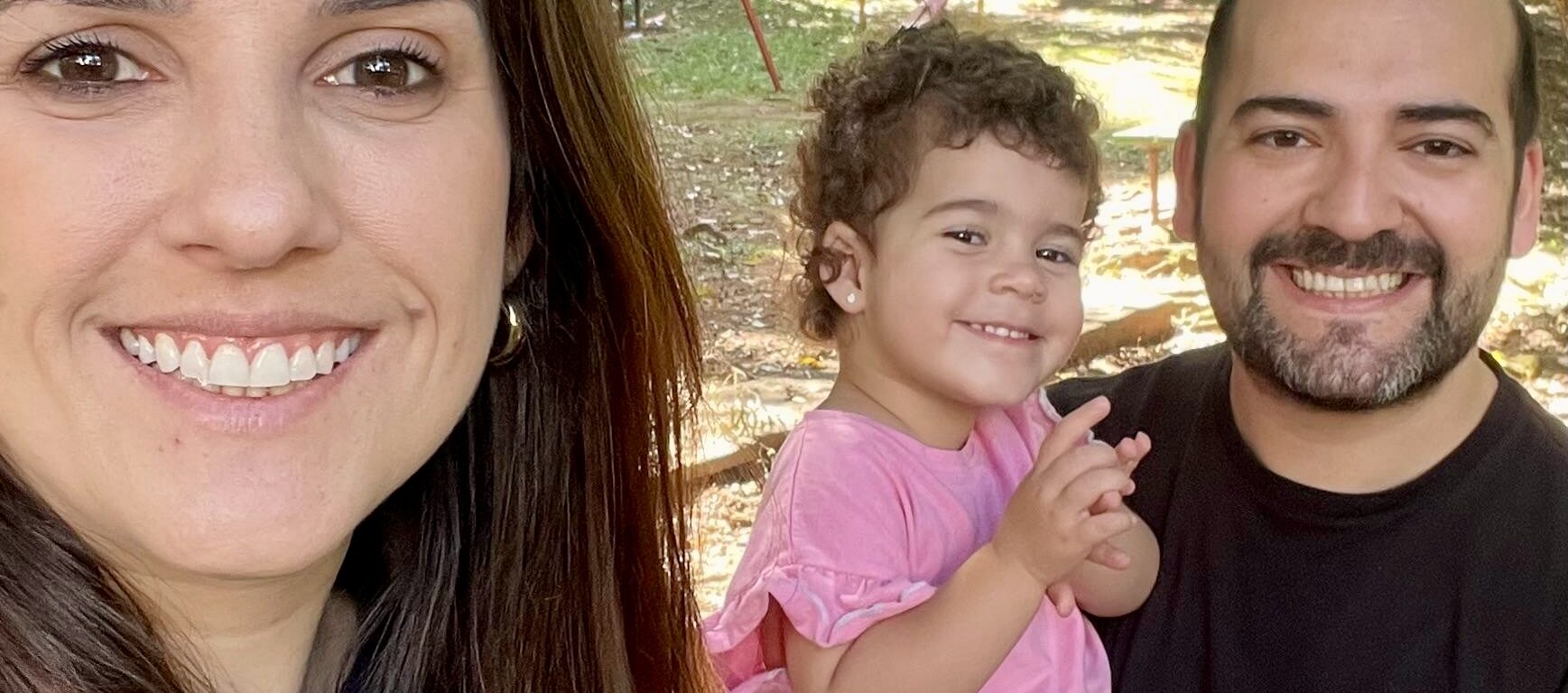
Olivia’s Story: Bringing Families Together Across Brazil Through LAMA2-RD
When Olivia was diagnosed with LAMA2-RD, her parents, Douglas and Melinda, began a journey that led them to establish Olivia Sem Limites, an association supporting families across Brazil. Here, they share the joys and challenges of life with Olivia, their hopes for the future, and the power of knowing you are not alone.
1. Could you briefly introduce yourselves? Who makes up your family, and how would you describe Olivia?
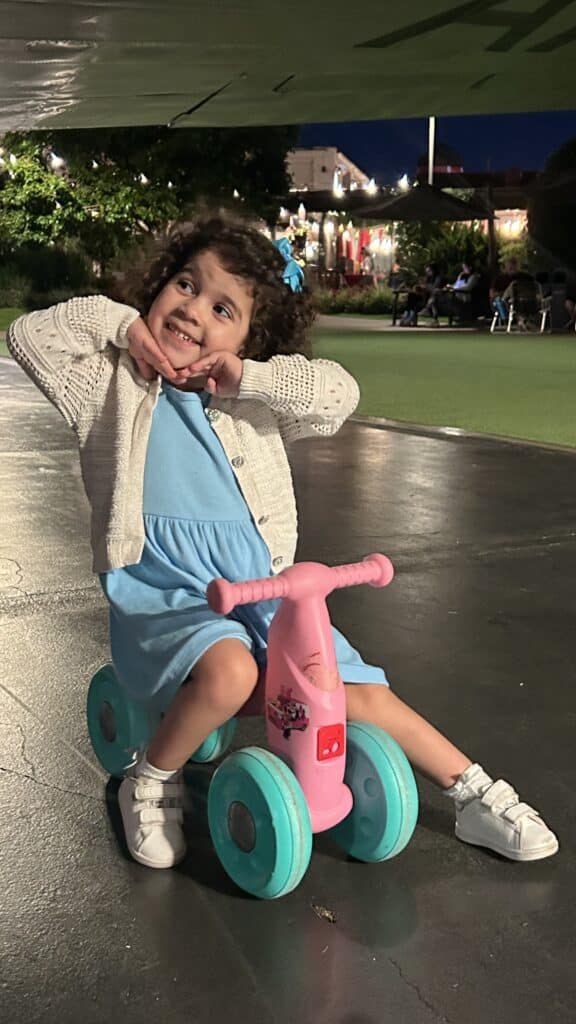
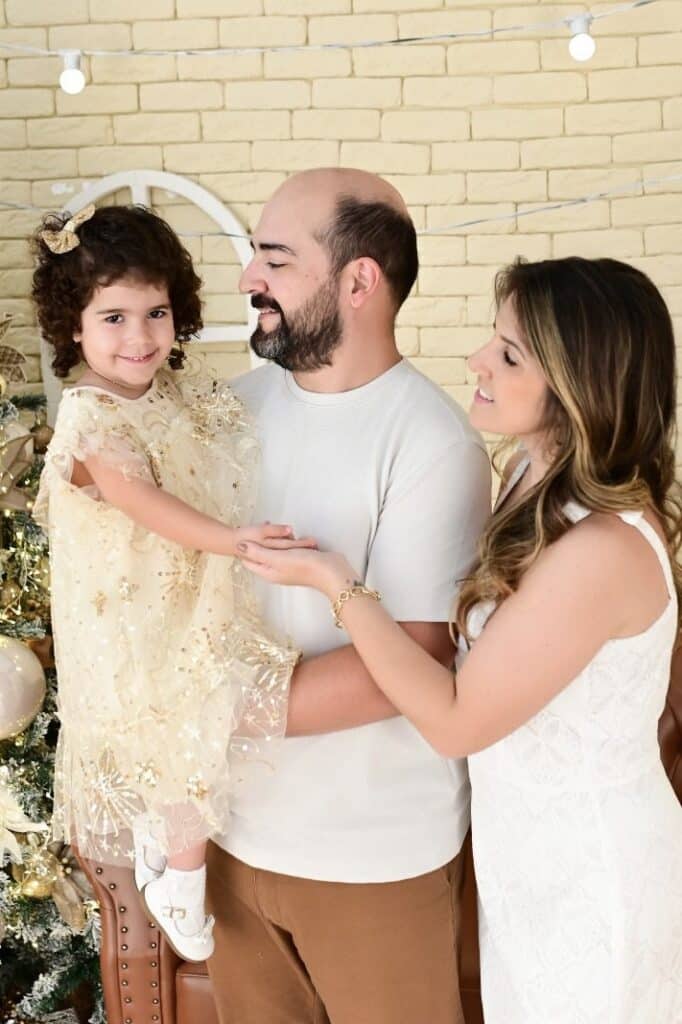
Our family consists of me, Douglas, Melinda, and Olivia. However, this refers to the family members who live together in the same house and share our daily lives. Olivia’s grandparents are also very present, as are her uncles and aunts, and we are grateful for so many friends whom we consider, in a way, part of our family: friends we have had since childhood, friends we met at Olivia’s school, and now a new LAMA2 family that has been gradually growing closer.
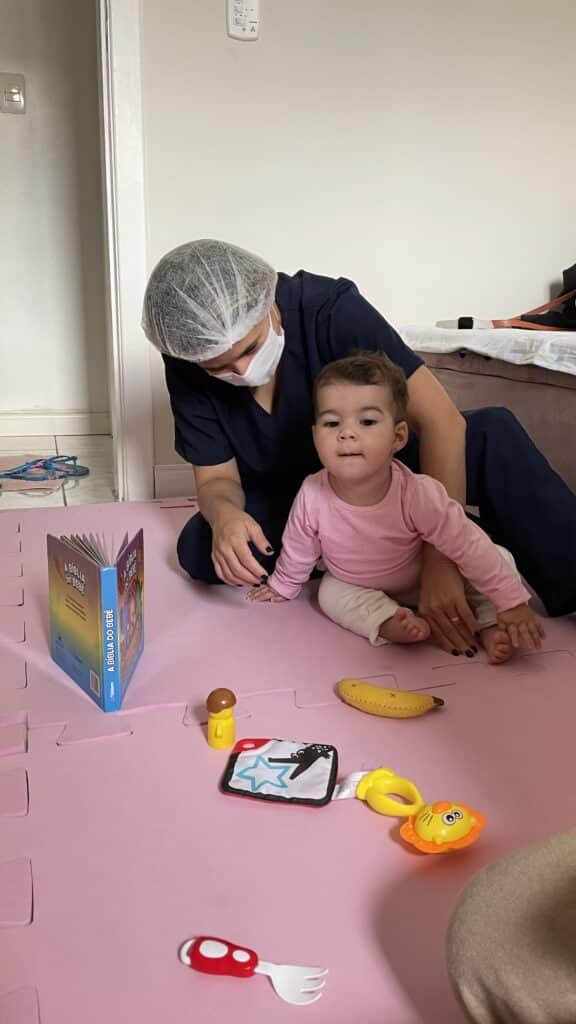
2. When did you first notice that Olivia was developing differently from other children, and what was the journey to receiving the LAMA2-RD diagnosis like?During Olivia’s first appointment with her pediatrician, the doctor noticed hypotonia and clubfoot. After that, we continued observing her, and at around eight months old, she was unable to do tummy time. We started physical therapy, thinking it might be related to some contracture or torticollis, but we were then referred to a neurologist, who ordered blood tests that showed elevated CK levels, as well as a CT scan whose report indicated signs compatible with LAMA2. We then sought out a geneticist, and the genetic panel confirmed the suspicion. We can say that the diagnosis came quickly and that we were very fortunate with the professionals who treated us and guided us.
3. How is Olivia doing today? What does she enjoy most, and what makes her happiest?
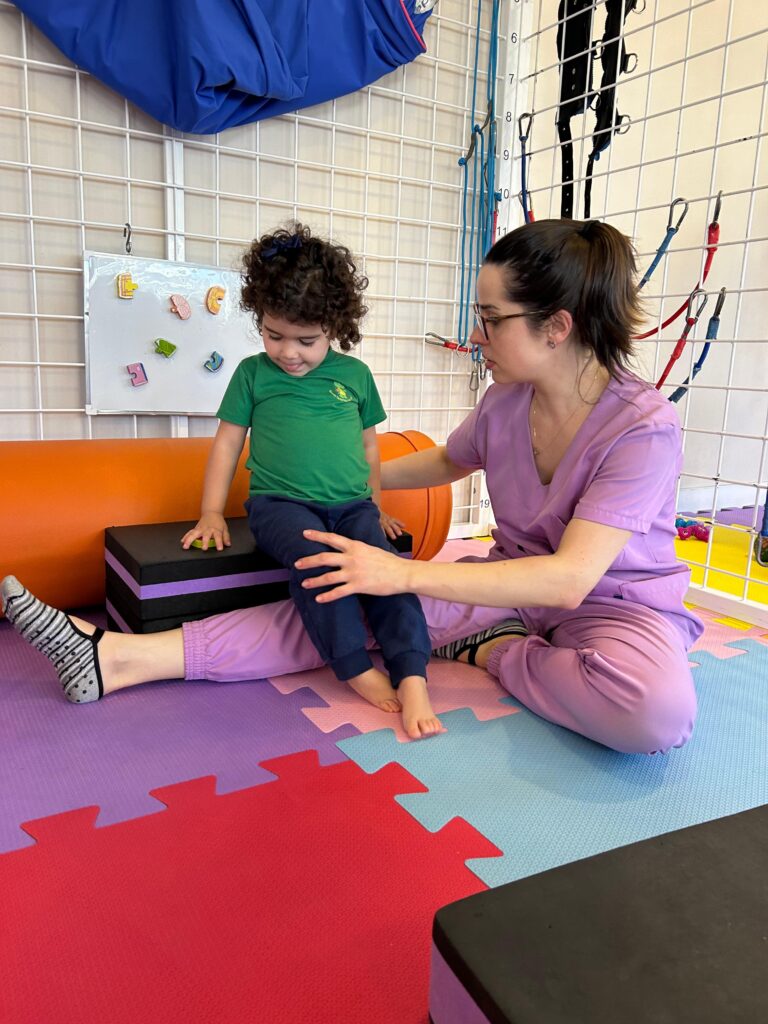
She is doing very well and is a very happy and charming child. Today, with more knowledge, we realize that she does not have such a severe form of the disease. Even so, there are many challenges because of her lack of strength. Recently, she underwent surgery to correct her Achilles tendons, which were shortened. In short, Olivia now has an almost normal life, like other children, but we are always monitoring her condition and know that we need to live one day at a time, celebrate the small achievements, work to preserve what is possible, and adapt as the disease progresses. Many things make Olivia happy. She is a girl who laughs easily and is very intelligent, so it would not be possible to name just one thing. But we can mention a few: being with her friends, especially her cousin; playing with miniature food and very small dollhouses; visiting toy and Lego stores; and she loves it when we are at home drawing and playing hide-and-seek with her.
 4. What are the biggest challenges that LAMA2-RD brings to Olivia’s daily life and to your family as a whole?
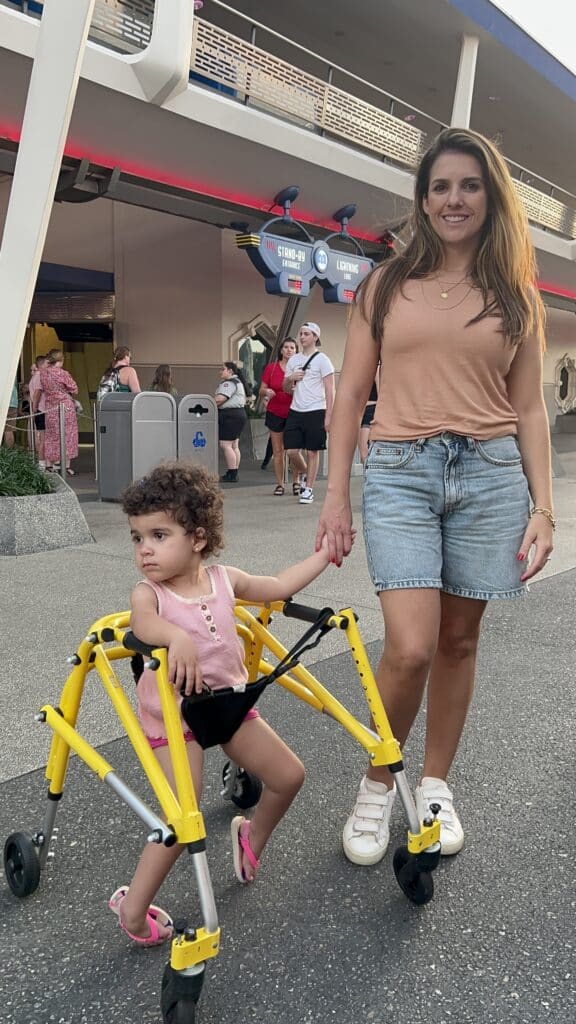
One major challenge is keeping her motivated and maintaining a strong and positive mindset. There are many visits to doctors, physical therapy sessions, and the daily challenge of raising awareness and promoting inclusion, especially at school, where she spends most of her time without our supervision. Another challenge is the cost. Much of the support we provide for her is financed through our family income. Few of the doctors who treat her are covered by our health insurance, and the same applies to tests, surgery, orthoses, equipment, and physical therapy.
5. Is there a special moment with Olivia that you will never forget because it truly shows who she is?
Whenever she is just with us at home, where she feels safe. She reveals all her intelligence through actions and questions that are remarkable for her age, as well as an incredible personality and great determination.
6. When you received the diagnosis, what information or support did you miss the most? And what helped you the most?
What frightened us the most was the lack of information. These are questions that every family receiving the diagnosis asks: Is there a treatment? Is there any ongoing research? What will the course of her life be like? What is her life expectancy? The lack of objective answers to these questions creates a feeling of helplessness and leaves us paralyzed. What helped us was the support of our family and friends. Later, the information we found online, through Voor Sara, CureCMD, and other sources, as well as talking to other families, helped us greatly.
7. You decided not only to care for Olivia but also to establish a foundation. What ultimately inspired you to take that step?
When we received the diagnosis, we were paralyzed for a few days. After that, we reorganized ourselves. We knew that we would need a great deal of strength, wisdom, and resilience to help Olivia have the best possible quality of life. We began a journey of tests, doctors’ appointments, research, and learning about what LAMA2 was, how the disease had manifested in Olivia, what stage it was at, and what we could do. During our research, we found patients and families in Brazil facing challenges much greater than ours, with the cruelest form of the disease. These families also needed to understand what the disease was. So we began discussing the possibility of organizing ourselves and doing something more. This idea stayed with us without becoming a reality for about six months, until we spoke with a particular family whose situation with LAMA2 was very difficult, especially regarding access to information and treatment. Seeing that family struggling alone, in a way, and seeing a child with so much strength and so many challenges from such a young age outraged us and became the trigger for us to take action. We gathered resources and dear friends, and about 30 days later, the Olivia Sem Limites Association was born.
 8. What are the main goals of your foundation, and which projects or achievements are you most proud of?
We work around three pillars: access to information for patients in Brazil, integration with doctors and researchers, and research funding. These three areas were specifically designed to improve care for families and patients, bringing them a better quality of life while there is still no supportive treatment or medication and, in this way, delaying the progression of the disease as much as possible while also accelerating studies and research so that this support or medication becomes available as quickly as possible.
Regarding our projects and achievements, we know that we are still a very small association and that we have a great deal of work ahead of us. But we can be proud because we know that today, families in Brazil who receive a diagnosis and search online for information about the disease can easily find us. We have spoken with several families, and the response is always the same: “We are so glad we found you and that we are not alone.” Another achievement is that patients in Brazil now have greater access to information about LAMA2 and care, and this is gradually changing the way people view what can be done in terms of support and maintaining quality of life. Even though it is currently a rare, progressive, and incurable disease, there is still a great deal that can be done. Finally, we are proud to be part of the global community and to participate in discussions about what can help patients and families.
9. What is the current situation for people living with LAMA2-RD in Brazil? What are the biggest challenges regarding healthcare, information, and support?
This is a very challenging question. Brazil is a very large country, with significant cultural differences, and each region faces different challenges. To put this into context, answering this question would be similar to considering the entire geographical extent of Europe. Without a doubt, there is a major difference between access to healthcare in Germany compared with Romania, Ukraine, the Netherlands, and Russia. But, looking at the situation in general, in my view, patients have insufficient access to healthcare and supportive treatment.
In Brazil’s major urban centers, especially in the Southeast and South regions, there are good professionals and reference centers for diagnosis and treatment. In the rest of the country, there are good professionals and specialized centers, but in much smaller numbers and with more limited access. I believe that, regarding access to diagnosis and treatment, the main challenge lies in the cost. Many specialized centers do not accept the public healthcare system or health insurance, requiring private payment only. Access to Brazil’s public healthcare system is quite broad; all diseases are covered, but it is a very large and complex system. There is a great deal of bureaucracy and long waiting lists, which often means that access takes years, and that time is crucial for patients. In short, we face a major struggle to ensure that middle- and low-income families have access to the minimum necessary for diagnosis and support. Given this reality, many families organize one-time crowdfunding campaigns to meet needs such as high-cost medications or equipment, including powered wheelchairs.
Regarding access to information, this is a very difficult issue. Virtually every new development, treatment, and guideline is made available in English, and among our population, only about 5% of people have a basic knowledge of English, while only about 1% speak it fluently. This is a major barrier. That is why we work so hard to provide information in Portuguese in the simplest way possible.
 10. Have you noticed that awareness of LAMA2-RD in Brazil has increased over the past few years? If so, what do you think has changed?
Yes, there has been an increase, especially within Brazil’s LAMA2 community. I believe that the internet and new technologies, such as artificial intelligence and automatic translation tools in internet browsers, have greatly helped people access valuable information published outside the country. However, the use of these new tools is only possible because of the work of Voor Sara and other associations, such as CureCMD, which have produced and published high-quality content.
11. Why do you believe it is so important for families to connect with one another and share their experiences?
A rare disease diagnosis immediately places us in a lonely position, where no one understands what we are experiencing or the challenges we face. When we are part of a community, we gain a sense of belonging and collaboration. Both families and patients are able to see a purpose in life.
12. You have been working closely with Stichting Voor Sara. How did that relationship begin, and what does this international collaboration mean to you and to the Brazilian LAMA2 community?
We first learned about Voor Sara through online searches. We sent an email, received a response, and then arranged a video call, which was our first contact. From the very beginning, it was clear to us that Voor Sara was a foundation guided by strong ethics and principles, with a deep connection to the needs of patients and their families. Today, we can say that we work very well together, and we believe that our collaboration and exchange of experiences will grow significantly in the coming years. We were very happy to meet Bram, Emine, Sara, Lana, and the entire family who attended the conference in Istanbul.
Being at the conference in Istanbul was especially meaningful because of the connections we made with other patients, families, and organizations. It was also where a very special project for the Brazilian LAMA2 community began: the translation and adaptation into Portuguese of the LAMA2-RD guide developed by Voor Sara. Finally, today we see Voor Sara not only as an important international partner, but also as an inspiration and a model for us to follow.
 13. If you could change one thing for children and adults living with LAMA2-RD in Brazil, what would it be?
Without a doubt, I would change access to supportive equipment, such as powered wheelchairs, high-quality walkers, ventilators, feeding tubes, and all the equipment necessary for a better quality of life. In Brazil, access is very difficult and very expensive.
14. Where do you hope to be in five years’ time, both for Olivia and for your foundation?
Regarding Olivia, we hope to keep her healthy, progressing as much as possible, and ready to receive any treatment that may become available in the future. Regarding the association, we hope to have made a transformative impact on the quality of life of patients and their families and, within each patient’s reality, that treatment and support will have been provided and that LAMA2 will no longer be an unknown disease within the medical community.
15. Finally, what message would you like to share with parents who have just learned that their child has LAMA2-RD?
You are not alone. Count on us and, above all, know that it is possible to be happy and enjoy life even in the face of such a difficult diagnosis.